

Sectors
Different properties need different routines.
The tasks may look similar from the outside, but access, timing and priorities change completely from one property type to the next.

Sector
Offices & Corporate Workplaces
Workplaces are judged on reception, meeting rooms and the state of shared spaces by mid-afternoon. Desks, screens and shared equipment attract dust continuously, and pantries and washrooms take the heaviest use.
What causes inconsistency
Problems usually come from rooms used irregularly — board rooms, quiet rooms and store areas — that are never given their own frequency, and from daytime washroom checks that are not written into the plan.
Scheduling & access
Cleaning generally runs before opening or after closing, with a short daytime round for washrooms, pantries and reception. Security clearance and after-hours building access are confirmed in advance.
Operational priorities
- Reception and meeting rooms prepared ahead of visitors
- Daytime checks for washrooms and pantries
- Irregularly used rooms given their own frequency
- Access and security rules built into the shift plan
- Most relevant services
- Office & Commercial Cleaning, Carpet & Floor Care, internal Glass Care.
- Define before starting
- Confirm the access and security arrangement, which rooms may be entered, who supplies consumables and who signs off the scope.
Sector
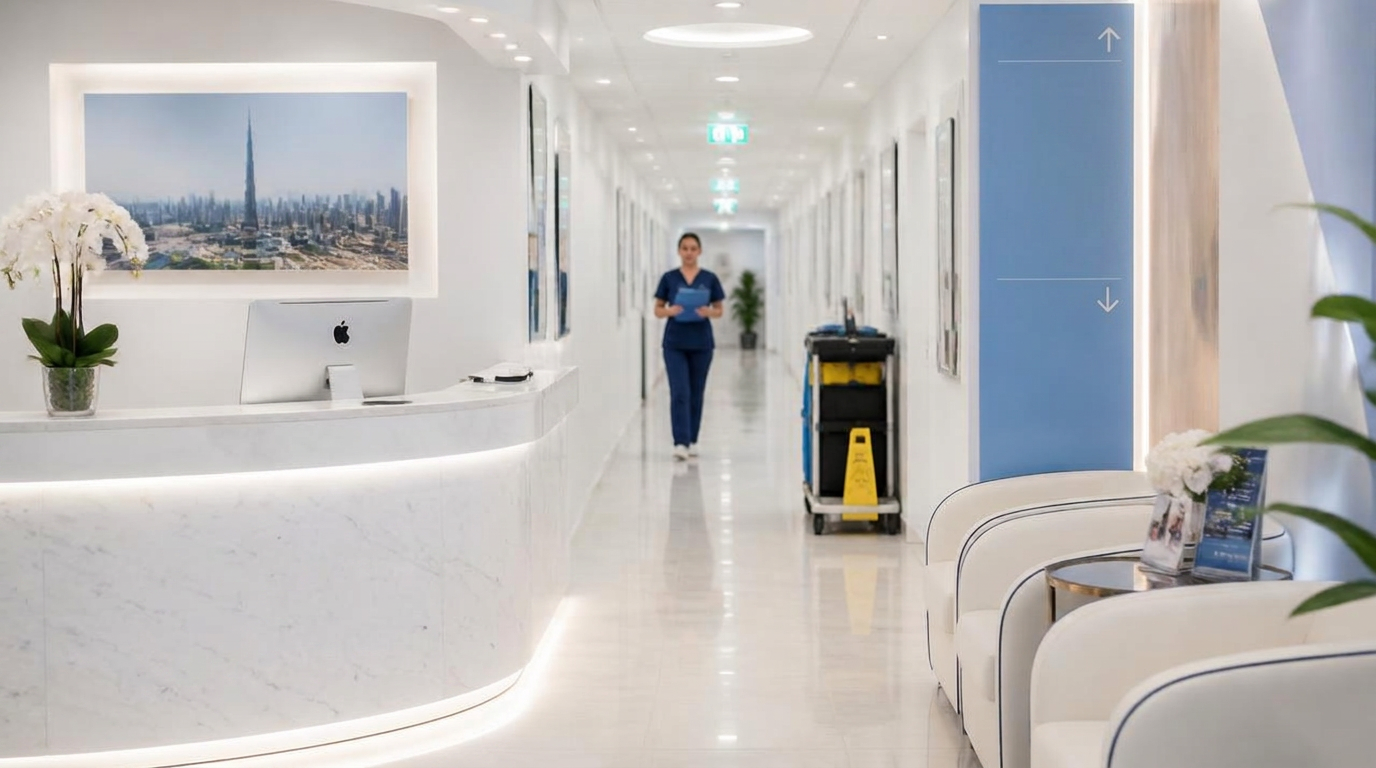
Clinics & Patient-Facing Practices
Patient-facing sites run to appointment schedules and to their own hygiene protocols. Waiting areas, corridors, washrooms and frequently touched surfaces need a structured, repeatable routine that fits between clinics.
What causes inconsistency
Inconsistency arises when rooms are occupied at the scheduled time and no fallback is agreed, or when the boundary between practice staff duties and cleaning duties is left informal.
Scheduling & access
Work is planned around appointment windows: before opening, after the last patient, or in defined gaps. Rooms in use are recorded and rescheduled rather than rushed.
Operational priorities
- Routines aligned with the practice's written requirements
- Cleaning windows planned around appointments
- Clear boundaries on rooms, materials and waste handling
- A recorded fallback when a room is in use
- Most relevant services
- Clinic & Practice Cleaning, Floor Care, internal Glass Care.
- Define before starting
- Define the hygiene protocol, restricted rooms, waste-handling instructions and which products must be used.

Sector
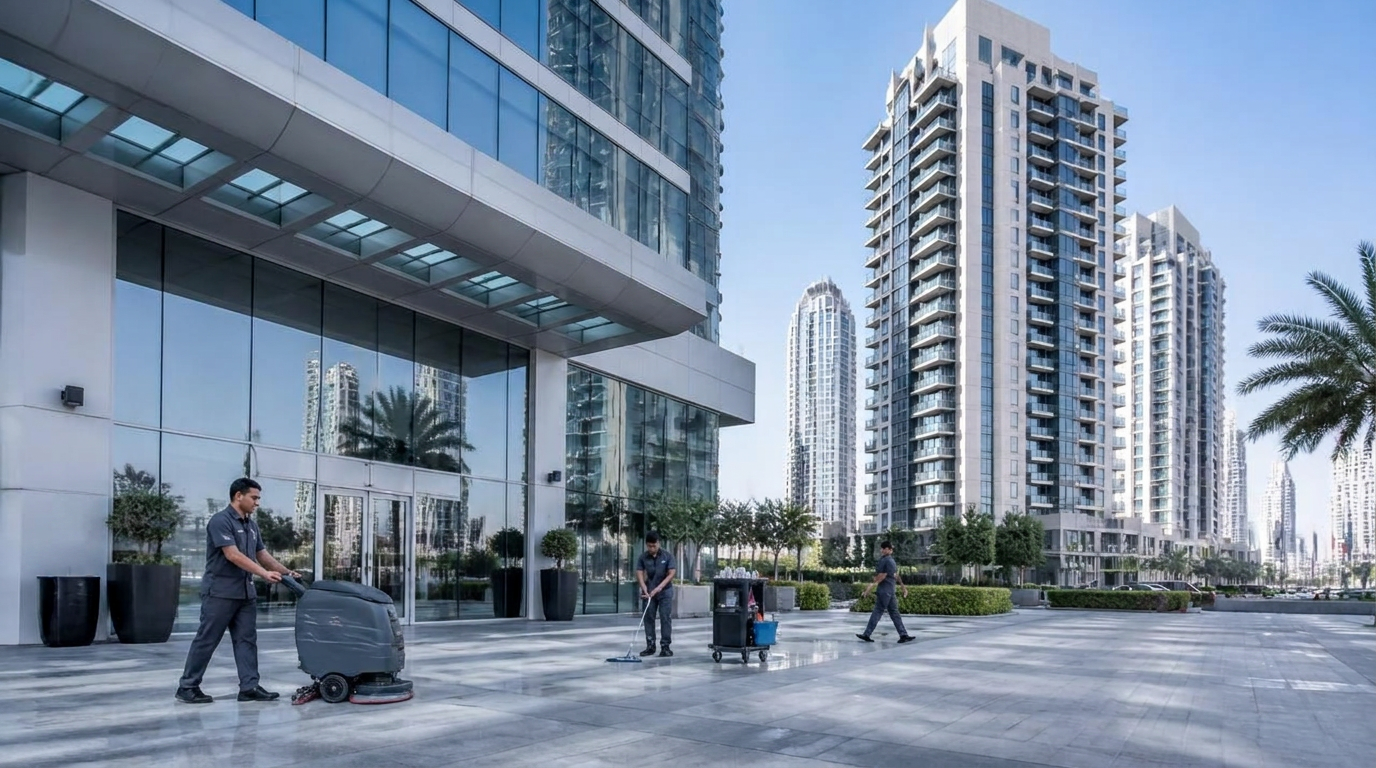
Residential Buildings & Common Areas
Lobbies, lifts, corridors, staircases and mailbox areas are what every resident sees daily. They need a visible daily rhythm plus periodic detail work on handrails, staircase edges, lift tracks and glass.
What causes inconsistency
Standards slip where responsibility is shared informally between residents, security staff and contractors, and where bin rooms, service stairs and parking routes fall outside the written scope.
Scheduling & access
Shared areas are cleaned early, before the main resident movement, with periodic tasks placed on a weekly or monthly cycle and recorded as they are completed.
Operational priorities
- Zone-by-zone daily, weekly and periodic frequencies
- Coordination with building management and access control
- Bin rooms and service routes written into the scope
- Simple records of what was completed
- Most relevant services
- Building & Common Area Cleaning, Floor Care, Glass & Entrance Care.
- Define before starting
- Define the zones included, the frequency per zone, access to service areas and the single point of contact for the building.
Sector
Property Managers & Landlords
Several properties mean several standards, several access arrangements and several budgets. A written scope per property and one accountable contact reduce the number of conversations required each month.
What causes inconsistency
Most issues come from verbal scope changes that never reach the schedule, and from turnaround work between tenancies being requested without a defined finish standard.
Scheduling & access
Recurring routines are fixed per property, while handover and turnaround cleaning is booked against the tenancy date and quoted separately after a short assessment.
Operational priorities
- A defined scope document per property
- Turnaround and handover cleaning between tenancies
- Documented changes rather than verbal adjustments
- One point of contact across multiple sites
- Most relevant services
- Building & Common Area Cleaning, Deep & Handover Cleaning, Carpet & Floor Care.
- Define before starting
- Define the finish standard expected at handover, who holds keys and access cards, and how additional works are approved.

Sector
Retail & Client-Facing Spaces
Retail floors are cleaned around trading hours. Entrance glass, floors and fitting areas carry the impression, and dust from outside is carried in continuously at the door line.
What causes inconsistency
Standards drop when the cleaning window is squeezed by early deliveries or late trading, and when stockrooms and staff areas are left out of the scope entirely.
Scheduling & access
Pre-opening and post-closing windows are agreed with the store or mall management, with floor and glass work timed so nothing is wet during trading.
Operational priorities
- Pre-opening and post-closing cleaning windows
- Entrance glass, floors and high-traffic touch points
- Stockrooms and staff areas included or explicitly excluded
- Fast reset of fitting and display areas
- Most relevant services
- Office & Commercial Cleaning, Glass & Entrance Care, Floor Care.
- Define before starting
- Define the trading hours, mall access rules, whether stockrooms are included and who is present at opening or closing.
Next step
Every sector starts the same way: with a site visit.
Share the property type, Dubai location, approximate size and preferred frequency. A site visit gives us the context required to define the right scope.